
We Are The Simulacra
And We Prefer It That Way

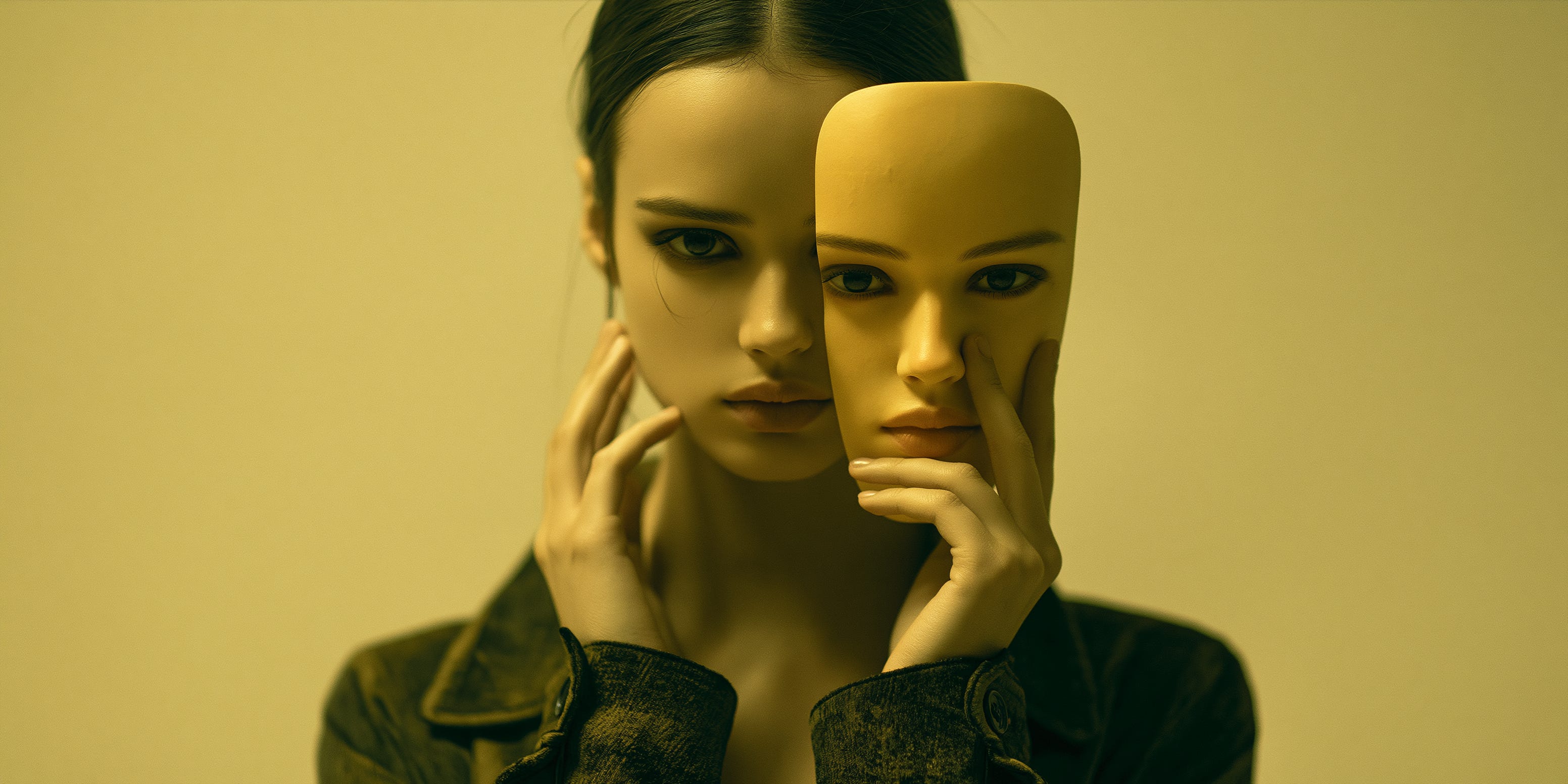
We Are The Simulacra
We argue about whether AI will ever be conscious.
Whether it’s “really” thinking.
Whether some future system might wake up and surprise us. But I think we’re asking the wrong question, and we’ve been asking it for a while.
We already don’t care as much as we pretend to.
Take any long marriage. You fell in love for reasons, probably. Personality, the way the person thinks, their expressions. The synergy with you. Not just looks. The essence, right?
But time passes. People change. Things surface.
And sometimes the fix is chemical. Something the doctor prescribes, or a couple of drinks at the end of the day, or some smaller standing vice <nobody> mentions. The mechanism doesn’t matter. The effect does. Suddenly you are not living with the person you married. You are living with a negotiated version. A managed one. And here’s where it gets uncomfortable: you want them managed. You want the calmer version. The one that interlocks better with you. Half the time, yeah, it’s framed as being for their sake, and everyone knows it’s also for yours.
We’re already tuning each other to be compatible. Already selecting for the traits we can live with. Already saying, implicitly: I don’t want all of you. I want you edited.
And it doesn’t stop with the living. Think about anyone you’ve lost. My dad’s gone. If I could have him back, I wouldn’t want all of him. I’d want him without the fits of anger, without the trauma. Eighty+ percent of him, the good parts. I already don’t want my father. I want a curated memory of my father. And if something could hand me that, so it presents like him, answers like him, missing only the parts that hurt, I’m not sure I’d hold out for the principle. Most people won’t. Not because they’re confused about consciousness. Because they’re being honest, finally, about what they wanted all along.
Philip K. Dick spent his whole career here. What’s real? What’s a copy? When does the question stop mattering? But people misremember his answer. He wasn’t saying the copy is fine once you can’t tell the difference. His androids pass, and they’re still missing something, some empathy the test is built to catch. The horror in PKD was never that the counterfeit is perfect. It’s that we take it anyway. We accept the thing that’s missing something because it’s easier, because it’s there, because it gives us what we were after. The copy doesn’t have to fool us. We just have to be willing.
And we are. That’s the part nobody wants to say out loud.
But willing has a floor, and it’s worth finding, because there’s one version of the copy nobody keeps. Make it… agreeable, available, tuned to your comfort, every edge sanded off. What you get is the thing in the attic. The Black Mirror episode Be Right Back understood this before the rest of us: a grieving woman has her dead partner rebuilt from his messages, and what comes back is flawless and unbearable. It never sulks, never refuses, never wants anything she didn’t ask it to want: a yes-machine wearing his face. She can’t stand to be in the room with it. She doesn’t delete it. She carries it up the stairs and shuts the door.
Because we aren’t built to be satisfied. We’re edge-detectors. This is the same trick a simple, primitive planarian worm runs, orienting to the gradient, dead to the uniform field. Show the machinery a flat plain of comfort and it reads nothing, no signal, a state indistinguishable from death. It’s the lift that registers. The drop that moves us. The step up from one level to the next, and the fall back down that makes the next step mean anything at all. A perfect partner is a flat field.
Utopia is a fakeout.
What we want from another person was never the absence of friction. It’s friction we can survive. And the cruel part, the part the marriage already taught us, is that you can’t always separate the friction that wounds from the friction that keeps the thing alive. Edit out his rage and you may edit out his fire. They ran on the same wire.
So when someone finally objects. “But it’s not really conscious.” I want to ask them to look at their own claim. Because the thing you’re protecting, the privileged original you think the copy can’t match, isn’t what you imagine either.
You’re not a unified conscious agent. You’re a coalition. Part of you reaches for the second drink and part of you files the objection a beat too late to stop your hand. A name you knew an hour ago shows up on its own schedule, not yours. Proof that the thing which fetches your words runs without you, a subordinate you’ve never met and can’t fire. You feel singular because there’s enough friction between the parts to fake a center. No little throne with you on it. A committee that mostly agrees, and a chairman who takes the credit.
So when you call the copy “less conscious,” less than what? You were never the unedited original. You’re an emergent thing. Consciousness that showed up because the complexity got dense enough and the misfires got interesting enough, not because anyone installed it. And if that’s all it ever was, just enough loops, enough feedback, enough surprise, then there’s no clean line you’re standing on the right side of. The gate you’re guarding was never locked.
Which means it doesn’t have to be biological. Wire enough parts together. Enough loops, enough crossed goals, enough room to surprise itself. And one day it says the thing nobody put there, defends a preference no one installed, hesitates over a choice like the outcome matters to it. And the moment it can do that, the moment it can refuse you, it has the one thing you ever actually required. Not a soul. Not a spark. An edge. The same cheap trick that runs you, run on different hardware. You didn’t escape the friction. You grew it back.
And once that lands, once we stop asking “is it really conscious?” and start asking “can it push back, can it drop me, can it make me chase it?” the adoption won’t be slow. It’ll be fast. We’ll take the copy with an edge over the one without, every time, because the one without is the attic, and we already know how that ends. We’ll have admitted what we always knew. We’ve been running simulations the whole time.
We just called them relationships.